Catalogus : Details
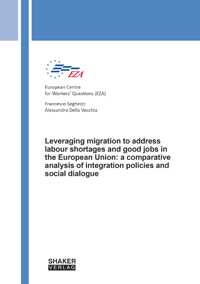 | European Centre for Workers' Questions (EZA) (Hrsg.), Francesco Seghezzi, Alessandra Della VecchiaLeveraging migration to address labour shortages and good jobs in the European Union: a comparative analysis of integration policies and social dialogue | ||||
|---|---|---|---|---|---|
| |||||
| ISBN: | 978-3-8191-0701-6 | ||||
| Reeks: | Wirtschaftswissenschaften (BWL, VWL, Recht,...) | ||||
| Trefwoorden: | Migration; sozialer Dialog; europäischer Arbeitsmarkt; demografischer Wandel; Gewerkschaften; Integration; soziale Sicherungssysteme; ; | ||||
| Soort publicatie: | Vakboek | ||||
| Taal: | Engels | ||||
| Pagina's: | 168 pagina's | ||||
| Gewicht: | 225 g | ||||
| Formaat: | 21 x 14,8 cm | ||||
| Bindung: | Softcover | ||||
| Prijs: | 58,80 € / 73,60 SFr | ||||
| Verschijningsdatum: | Oktober 2026 | ||||
| Kopen: | |||||
| Aanbevelen: | Wilt u dit boek aanbevelen? | ||||
| Recensie-exemplaar | Bestelling van een recensie-exemplaar. | ||||
| Verlinking | Wilt u een link hebben van uw publicatie met onze online catalogus? Klik hier. | ||||
| Samenvatting | Europe is undergoing profound demographic change: declining birth rates, rising life expectancy and an ageing population are reshaping labour markets and increasing pressure on social security systems. As the working-age population declines, labour and skills shortages are becoming more pronounced. Against this backdrop, migration is gaining importance for the future of European labour markets. Migrant workers can help address skills shortages, support social security systems and contribute to economic dynamism. Yet their labour market integration remains challenging. The recognition of foreign qualifications, limited access to training, precarious employment and structural disadvantages continue to create barriers. This study examines how Europe is responding to these challenges, focusing on Italy, Spain, Germany, Poland and Romania – five countries with different demographic trends, labour market structures and migration policies. A comparative analysis identifies political and institutional conditions that facilitate or hinder migrant integration. Particular attention is paid to social partners, especially trade unions. Through collective bargaining, representation, advice and training, they can promote fair working conditions, combat discrimination and support integration. Social dialogue thus provides an important link between policy strategies and workplace realities. The study shows that migration cannot be considered separately from the future of European labour markets. Successful integration is essential to addressing demographic change in a socially equitable and economically sustainable way. |